When you’re planning to invest in a modular kitchen or wardrobe for your Hyderabad home, you’ll often hear about postforming. But what exactly is postforming, and why should it matter to you?
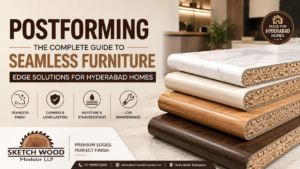
Postforming has become the furniture industry’s gold standard for creating beautiful, seamless edges that look premium and last for decades. Unlike older edge-finishing methods, postforming creates surfaces without visible seams or joints, making your furniture look like it was crafted by master craftsmen.
For homeowners in Hyderabad and Telangana, where humidity and moisture are constant challenges, postforming offers something traditional finishes simply cannot provide: complete edge protection that keeps your investment safe from the region’s climatic challenges.
This guide walks you through everything you need to know about postforming—from how it works to why it’s worth the investment. Whether you’re a first-time homebuyer, planning a kitchen renovation, or working with an interior designer, this article will help you make smart decisions about your furniture.
What is Postforming?
Understanding the Basics
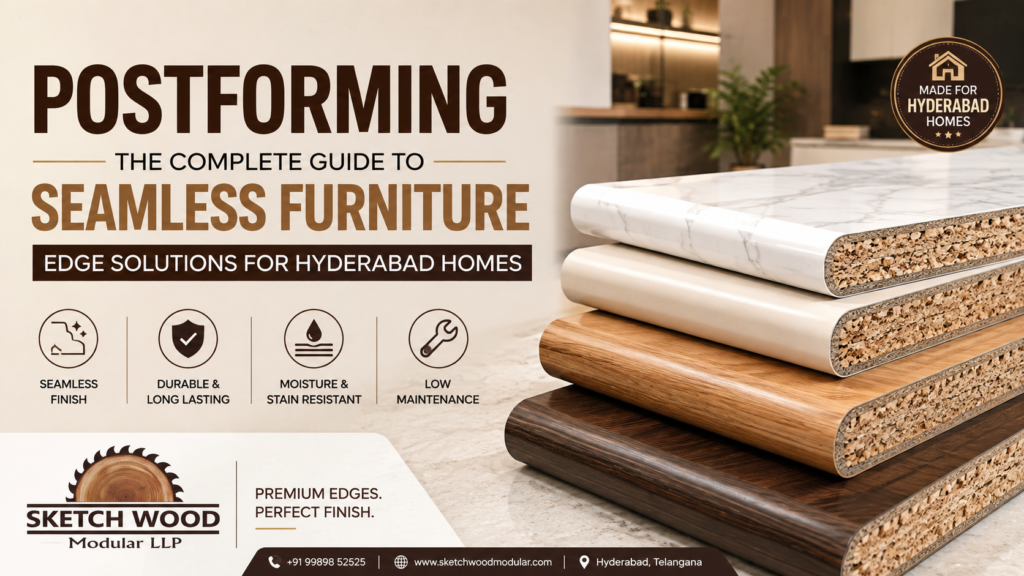
Postforming is a specialized manufacturing technique that applies a continuous laminate surface to furniture edges, creating a seamless, smooth finish without visible joints. The process was developed in Germany in 1976 and has since revolutionized how premium furniture is made worldwide.
The term “postforming” comes from the timing of the process. The laminate is shaped and formed after being applied to the base material (substrate), which is different from older methods where everything was cut and assembled separately.
Think of it this way: traditional edge banding is like adding a trim or border to cover something up. Postforming, on the other hand, is like bending a single continuous sheet around the edges, making them an integral part of the design rather than a patch-up solution.
How Postforming Creates Superior Results
In traditional furniture manufacturing, you have visible seams where the flat surface meets the edge material. These seams are not just visual issues—they’re also vulnerable points where moisture can seep in, dust accumulates, and the materials can separate over time.
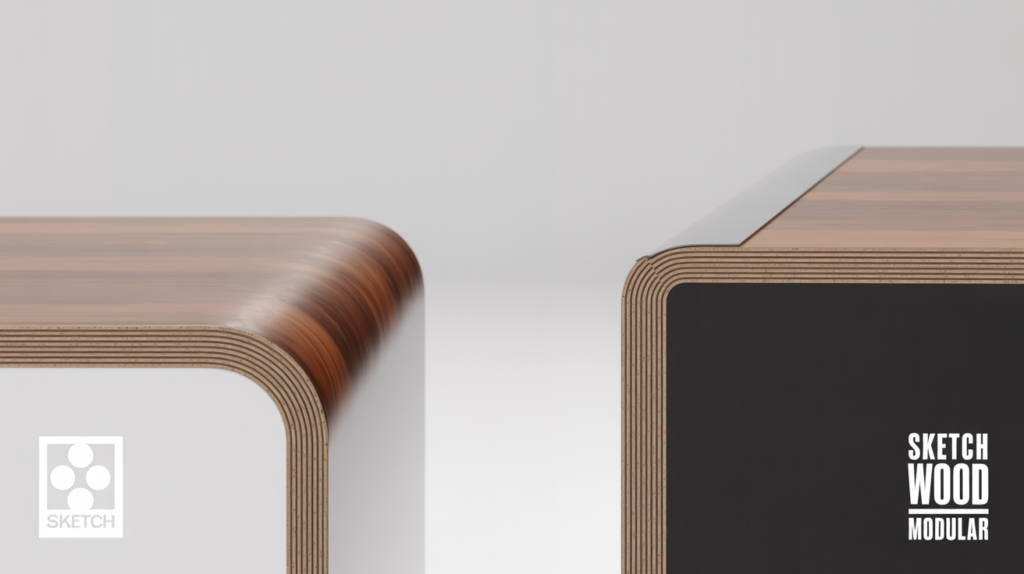
Postforming eliminates these problems entirely. The seamless surface flows continuously over the edges, creating a unified design that’s both beautiful and protected. This integration means that the edge becomes just as strong and durable as the main surface.
The Postforming Process Explained
Understanding How Postforming Works
The postforming process might sound complicated, but the basic concept is quite straightforward. Here’s how modern furniture manufacturers create those beautiful seamless edges you see in premium kitchens and wardrobes.
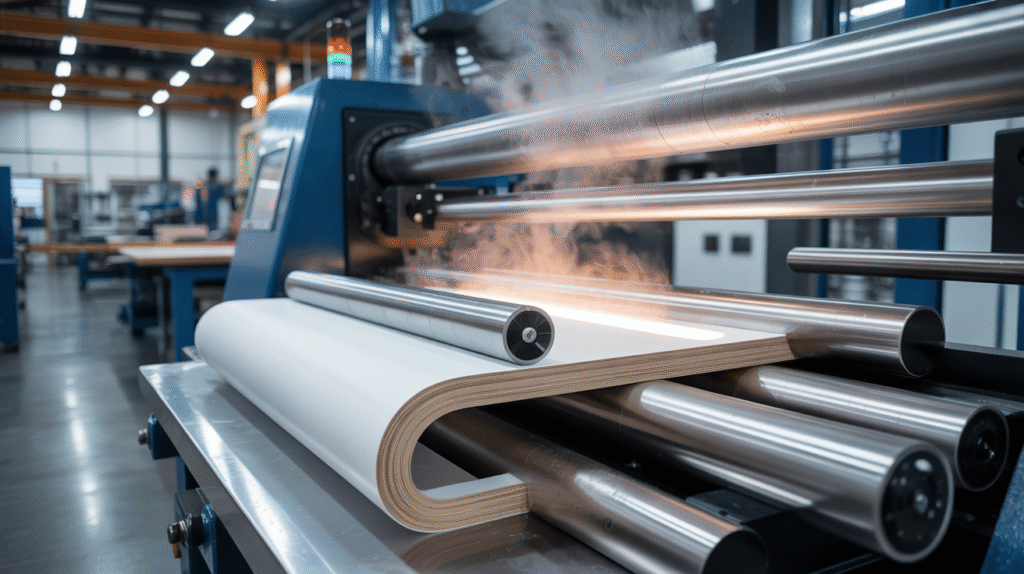
First, the manufacturer starts with a substrate—typically MDF (Medium Density Fiberboard) or quality plywood. This substrate is pre-profiled, meaning it already has the edge shape carved into it (usually a rounded or bullnose profile).
Next, a laminate sheet (usually high-pressure laminate or HPL) is positioned on this substrate. The laminate is then heated to a specific temperature—usually around 300-400 degrees Fahrenheit. At this temperature, the laminate becomes slightly flexible, almost like how plastic becomes pliable when warmed.
Once the laminate reaches the right temperature, it’s pressed over the pre-formed edge shape using rubber rollers and precision machinery. This creates that signature smooth, rounded edge that characterizes postformed furniture.
Finally, any excess laminate is trimmed away with precision cutting equipment, and the surface is finished to perfection.
The Two Main Postforming Methods
Throughfeed Method is the most common approach used by professional manufacturers. In this method, pre-profiled panels with laminate already attached pass through a specialized machine continuously. Radiant heaters warm the laminate to the perfect temperature, and rubber rollers guide it around the edge profile. This method is incredibly efficient and produces consistent, high-quality results. Modern throughfeed machines can process 20-25 meters of material per minute.
Stroke Method is used for custom pieces and more complex shapes. Instead of continuous processing, workpieces are positioned against a heating rail individually, and the laminate is formed around the edge using manual or semi-automatic equipment. This method offers more flexibility for unique designs but is slower than throughfeed processing.
Why Temperature Control Matters
The success of postforming depends almost entirely on precise temperature management. If the laminate isn’t warm enough, it will crack during forming. If it’s too hot, it can delaminate or become damaged. Professional postforming machines use advanced heating systems with multiple heating zones and sensors to maintain exact temperatures, ensuring perfect results every single time.
Postforming vs Edge Banding: Which Should You Choose?
Side-by-Side Comparison
Many people confuse postforming with edge banding because both are methods of finishing furniture edges. However, they’re quite different approaches with very different results.
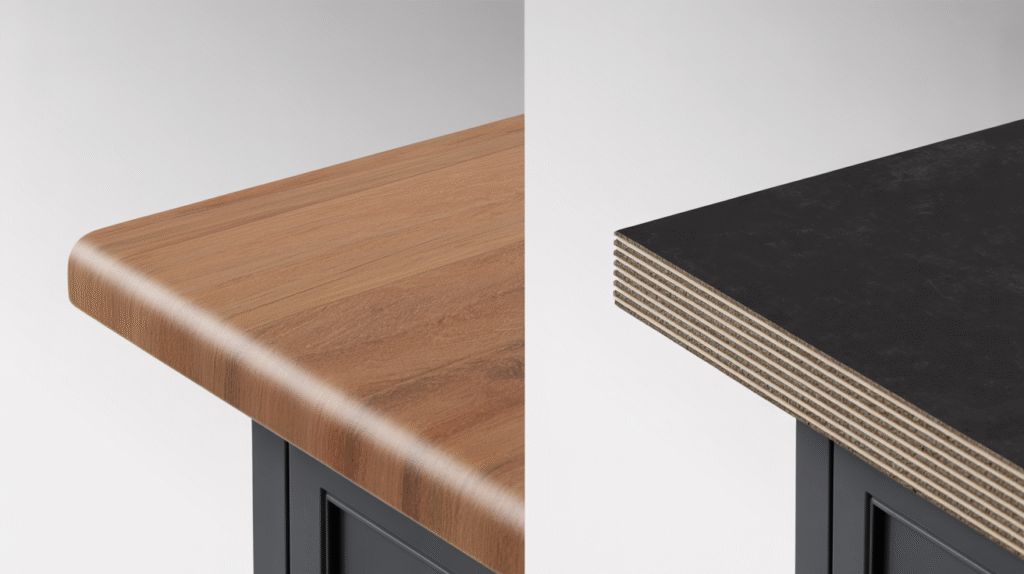
Edge Banding is an older, simpler method. It involves taking a thin strip of material (plastic, veneer, or laminate) and gluing it onto the raw edge of a board. It’s like adding trim to the edge after the fact. This method is quick, inexpensive, and works fine for basic furniture. However, the glue line is visible, the edges remain straight (not rounded), and moisture can eventually seep into that joint line.
Postforming, as we’ve discussed, creates an integrated, seamless edge by forming the entire laminate surface continuously over the edge profile. There’s no visible glue line, no joint for moisture to penetrate, and the edges are beautifully rounded.
Comparison Table
| Feature | Postforming | Edge Banding |
|---|---|---|
| Visual Appearance | Seamless, smooth, premium look | Visible joint line present |
| Edge Shape | Perfectly rounded and smooth | Straight edges |
| Moisture Resistance | Exceptional—fully sealed edges | Good, but vulnerable at joints |
| Durability | 15-20+ years with minimal wear | 8-12 years typical lifespan |
| Maintenance | Minimal—easy wipe-down | More susceptible to edge wear |
| Design Flexibility | Unlimited curves and profiles possible | Limited to straight designs |
| Cost | Higher initial investment | More budget-friendly |
| Best For | Premium kitchens, designer wardrobes | Budget projects, commercial use |
When Postforming Makes Sense
Choose postforming if you want your furniture to look and feel expensive, if you’re investing in a long-term piece that will outlast trends, or if you live in a humid climate (like Hyderabad) where moisture protection matters. Postforming is ideal for modular kitchens, premium wardrobes, designer cabinets, and any furniture where aesthetics and durability are priorities.
When Edge Banding is Adequate
Edge banding works fine for temporary installations, budget-conscious projects, commercial furniture that gets replaced regularly, or simple designs that don’t showcase the edges prominently.
Key Benefits of Postforming Technology
1. Stunning Seamless Aesthetics
Walk into any home with a postformed modular kitchen and you’ll immediately notice the difference. The seamless flow of the laminate over the edges creates a premium, designer look that catches the eye. There are no visible joints to distract from the overall design, no manufacturing compromises visible in the finished product.
This aesthetic quality is one of the biggest reasons Hyderabad’s premium home market has embraced postforming. In a city where real estate is competitive and home design matters, postformed kitchens and wardrobes signal quality and thoughtful design.
2. Exceptional Durability That Protects Your Investment
Rounded edges are inherently more resistant to damage than sharp or exposed edges. When you bump a postformed cabinet edge against something, the rounded profile simply absorbs the impact without chipping or cracking. This means your furniture stays looking new far longer than traditionally finished pieces.
We’ve seen postformed kitchens installed fifteen years ago in Hyderabad homes that still look like they were installed last year. The seamless construction means there’s no place for damage to start—the surface is unified and protected.
3. Superior Moisture Protection in Humid Climates
Here’s what makes postforming absolutely ideal for Hyderabad: Telangana’s climate is humid, especially during monsoon season. Traditional edge banding eventually fails in this environment because moisture seeps into the glue lines and causes the substrate to swell or the edge material to separate.
Postforming’s seamless design means there’s nowhere for moisture to penetrate. The laminate completely seals the substrate edges, protecting them from moisture infiltration, humidity fluctuations, and the seasonal challenges that Hyderabad homes face.
4. Design Flexibility That Architects Love
Postforming allows manufacturers to create curved edges, custom profiles, and innovative shapes that would be impossible with traditional edge banding. Architects and interior designers love this flexibility because it allows them to create truly unique, personalized furniture solutions.
Whether you want bullnose edges, waterfall edges, or completely custom profiles, postforming makes it possible.
5. Easy Maintenance That Saves Time
Because the surface is seamless, there are no crevices where dust, grease, or food particles accumulate. A simple wipe-down with a soft cloth and mild soap keeps postformed surfaces pristine. In a busy kitchen, this ease of maintenance is more valuable than people realize.
Compare this to edge-banded furniture where you constantly have to clean out the seam line, and you’ll quickly appreciate the postforming advantage.
6. Professional Appearance That Increases Home Value
In Hyderabad’s competitive real estate market, homes with postformed modular kitchens command higher resale values. Potential buyers immediately recognize postformed finishes as a marker of quality and good maintenance. It’s one of those upgrades that delivers both immediate aesthetic benefits and long-term financial advantages.
Real-World Applications in Hyderabad Homes
Modular Kitchens: Where Postforming Shines
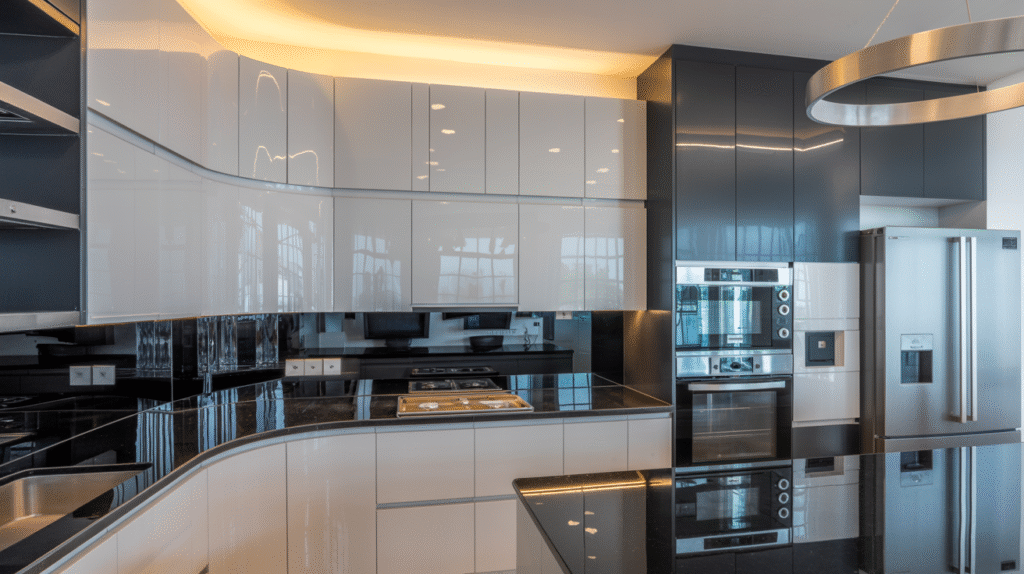
The modular kitchen is where postforming truly excels. Kitchen cabinets face constant moisture from cooking steam, humidity, spills, and cleaning. They also get touched frequently and are the focal point of the home. Postforming addresses all these challenges perfectly.
High-gloss postformed finishes in materials like Merino laminate have become incredibly popular in Hyderabad kitchens because they’re both beautiful and practical. They reflect light to make kitchens appear larger and more modern, and the seamless surfaces are perfectly easy to clean.
Wardrobes and Storage Solutions
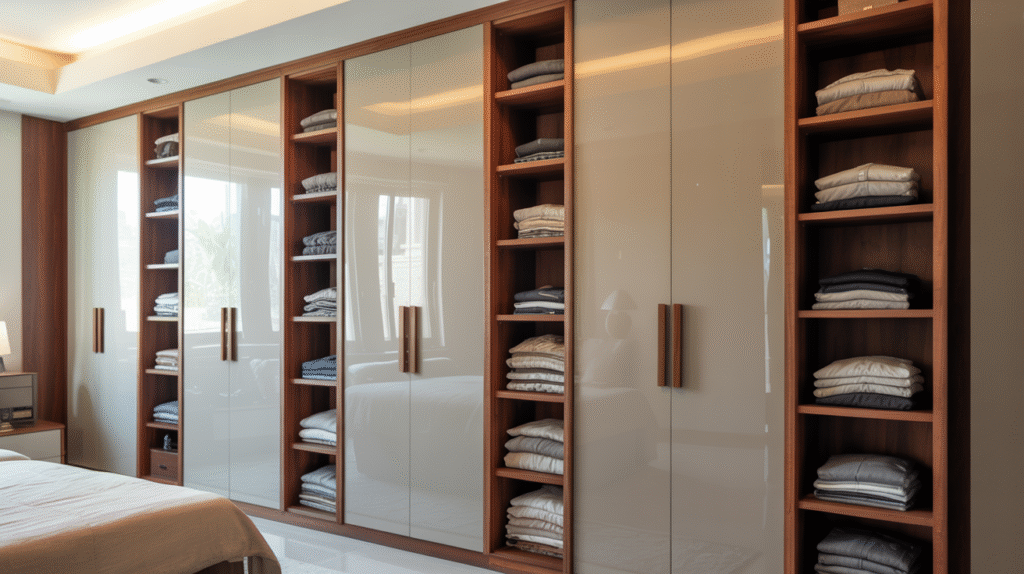
Hyderabad’s compact apartments mean storage solutions need to work hard. Postformed wardrobes provide beautiful, durable storage with an upscale appearance. The seamless construction prevents moisture from damaging your clothing and valuables—important in Telangana’s humid conditions.
Home Office and Study Spaces
With remote work becoming increasingly common, many Hyderabad homeowners are investing in home office furniture. Postformed study tables, shelving, and storage units create a professional environment while ensuring durability for regular use.
Why Postforming Works in Telangana’s Climate
Telangana experiences high humidity levels year-round, with particularly intense moisture during June through September. Postforming is engineered specifically to handle these environmental challenges:
- Fully sealed edges prevent moisture infiltration
- No vulnerable joints where water can collect
- Laminate materials resist humidity-induced swelling
- Maintains structural integrity across seasonal temperature variations
This climate-specific advantage is one of the biggest reasons postforming has become the preferred choice among Hyderabad’s sophisticated homeowners.
Materials and Finishes for Postforming
High-Pressure Laminate (HPL): The Foundation of Quality
High-pressure laminate is the primary material used in professional postforming. HPL is manufactured under extreme pressure (over 1000 psi) and intense heat, creating an incredibly durable surface that’s nearly indestructible under normal household conditions.
HPL combines multiple layers: decorative papers (that provide the color and pattern), melamine resin (that creates the wear-resistant surface), and phenolic-impregnated kraft layers (that provide strength). This sophisticated construction is why quality postformed surfaces last so long.
Substrate Options: What Goes Underneath Matters
MDF (Medium Density Fiberboard) is the most common substrate for postforming. It offers a smooth, uniform surface ideal for forming, excellent dimensional stability, and consistent quality. Most quality postformed furniture uses MDF substrate.
Quality Plywood is increasingly popular for humid environments like Hyderabad. Water-resistant plywood (MR grade) or boiling-water proof plywood (BWP grade) provides superior moisture resistance. For homeowners who want maximum protection in Telangana’s humid climate, plywood substrate is worth the additional investment.
Edge Profile Options
When you order postformed furniture, you’ll choose an edge profile. The most common options are:
Bullnose Edge features a rounded dome shape and is the most popular profile. It’s elegant, modern, and forgiving of minor imperfections. Most luxury furniture uses bullnose profiles.
Euro-Style Edge provides a subtler curve, perfect for contemporary minimalist designs that want a modern look without drama.
No-Drip Edge slopes slightly to prevent water pooling on top surfaces—an excellent choice for kitchen counters and bathroom vanities.
Waterfall Edge creates a continuous visual pattern that flows down the sides, perfect for statement pieces.
Rounded Edge provides a gentle, soft curve that works with both traditional and modern designs.
Available Colors and Textures
Modern postforming offers over 100 colors, textures, and finishes to choose from. This incredible variety means you can match postformed furniture to virtually any design aesthetic.
Popular finishes in Hyderabad currently include:
High-Gloss Merino Laminate creates stunning, reflective surfaces that make kitchens appear brighter and more spacious. This finish has become the go-to choice for premium Hyderabad kitchens.
Soft Matte Finishes provide an elegant, understated sophistication that’s gained popularity with designers who appreciate subtlety over drama.
Wood-Look Laminates combine modern durability with natural aesthetics, appealing to homeowners who love the appearance of wood but want superior performance.
Neutral Earth Tones in warm creams, soft greys, and warm beiges work with virtually any interior design style and age beautifully.
Quality Indicators to Know
When you’re evaluating postformed surfaces, look for these quality markers:
High-quality postforming features armored protection surfaces where aluminum oxide microscopules are bonded to the laminate, providing exceptional scuff resistance. Premium brands will explicitly mention this feature.
The color saturation should be consistent throughout—no fading, no color variations, no printing imperfections. Perfect joint alignment is another sign of quality—there should be absolutely no visible variations or unevenness where different panels meet.
The surface should be perfectly smooth with no bumps, waves, or imperfections. And finally, seams should be virtually invisible—a hallmark of truly premium postforming.
Understanding Postforming Costs
Pricing Reality
Let’s be honest: postforming costs more than basic edge banding or traditional finishing methods. Here’s what you can typically expect:
- Basic edge-banded furniture: ₹15,000-25,000 per linear meter
- Postformed furniture: ₹25,000-40,000 per linear meter
- Premium postformed collections: ₹40,000-60,000+ per linear meter
The price difference reflects the superior manufacturing process, quality materials, and durability you’re gaining.
Why Postforming Costs More
Postforming requires specialized machinery that’s expensive to purchase and maintain. It requires skilled technicians with manufacturing expertise. The materials (high-quality laminates and substrates) cost more than alternatives. And the process itself is more time-intensive than simple edge banding.
But here’s the important part: you’re not just paying for a different manufacturing method. You’re paying for significantly superior performance and longevity.
Long-Term Value Analysis
Let’s do the math on actual value:
Postformed kitchen investment: ₹1,20,000 (at ₹30,000 per linear meter for a 4-meter kitchen)
- Expected lifespan: 18-20 years
- Annual cost: ₹6,000-7,000 per year
- Home value addition: ₹1,50,000-2,00,000
Compare this to edge-banded furniture at ₹15,000 per meter:
Edge-banded kitchen investment: ₹60,000
- Expected lifespan: 8-10 years
- Annual cost: ₹6,000-7,500 per year
- Home value addition: ₹50,000-75,000
When you factor in that you’ll need to replace edge-banded furniture once or twice during the time a postformed kitchen lasts, the cost per year actually becomes comparable. But the postformed kitchen maintains its beauty throughout, while edge-banded furniture begins showing wear after just a few years.
ROI and Home Value
Homes with postformed modular kitchens command 10-15% higher property values in Hyderabad’s real estate market. For a ₹50 lakh property, that’s an additional ₹5-7.5 lakh in value. A ₹1.2 lakh investment that generates ₹5+ lakh in home value is an excellent return.
How to Care for Postformed Surfaces
Daily Maintenance is Simple
The beauty of postformed surfaces is how easy they are to maintain. Your daily cleaning routine should include:
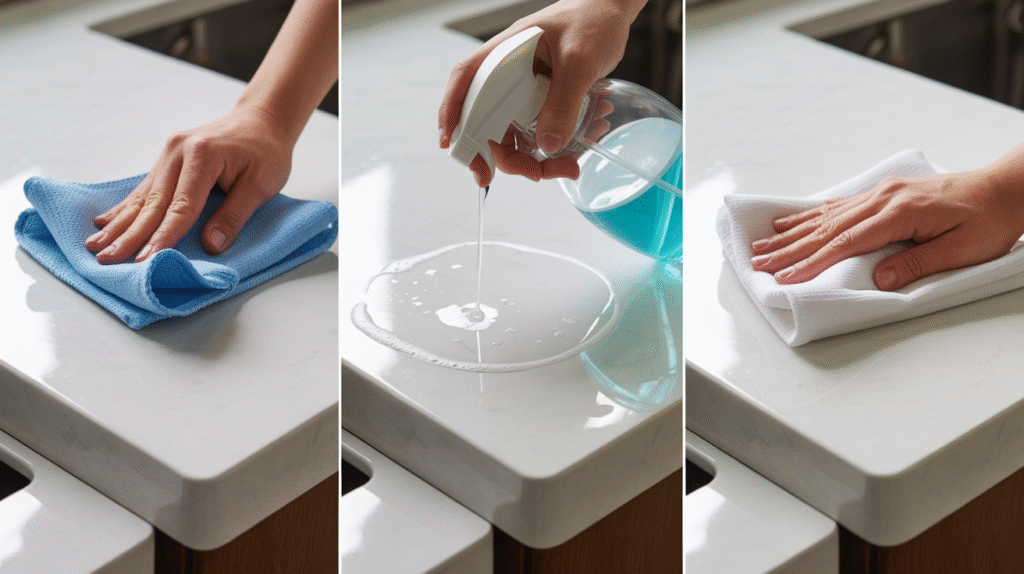
Step 1: Use a soft microfiber cloth dampened with warm water to wipe down surfaces.
Step 2: For stubborn stains or dried food, apply a mild soap solution and let it sit for a minute or two before wiping.
Step 3: Wipe the surface dry immediately with a clean cloth to prevent water spots.
Step 4: Use gentle, circular motions rather than aggressive scrubbing.
That’s it. No special products, no complex procedures, no time-consuming maintenance.
What to Avoid
Never use harsh chemical cleaners that can damage the laminate surface. Avoid scouring powders or steel wool, which will scratch the finish. Don’t use sharp implements that could gouge the surface. And avoid prolonged water exposure—clean spills promptly and wipe surfaces dry.
Durability and Longevity
With proper maintenance, postformed surfaces retain their beauty for 15-20+ years or longer. Here’s what you can typically expect:
First 5 years: Your postformed surfaces will look absolutely perfect, like they’re brand new. No visible wear, no fading, no changes.
5-10 years: Still in excellent condition with minimal wear. Depending on usage intensity, you might notice very minor surface wear, but the finish remains beautiful.
10-20 years: Still excellent overall appearance with minimal aging. The surfaces have proven their durability and continue to look far better than any edge-banded alternative would at this age.
20+ years: At this point, the core structure remains sound, though you might consider refinishing or updating the design if aesthetics become a concern.
Factors That Extend Lifespan
Maintaining proper indoor humidity (35-55% relative humidity) keeps postformed surfaces happy. Prompt cleanup of spills prevents moisture damage. Regular gentle maintenance keeps surfaces looking fresh. And minimizing direct sunlight in some cases prevents any potential fading.
Factors That Reduce Lifespan
Prolonged exposure to moisture or high humidity accelerates wear. Extreme temperature fluctuations can cause stress on the materials. Heavy, abusive use obviously impacts durability. And lack of maintenance allows dirt to accumulate and potentially damage surfaces over time.
Why Sketch Wood Modular Leads in Postforming
Our Expertise in Postforming Technology
Sketch Wood Modular has built a reputation as Hyderabad’s trusted partner for premium modular furniture incorporating cutting-edge postforming technology. Our team brings decades of combined experience in:
Postforming design and manufacturing that transforms spaces, climate-appropriate solutions specifically engineered for Telangana’s unique humidity challenges, custom design that optimizes every square centimeter of your available space, and quality assurance with precision engineering at every stage.
Local Understanding of Hyderabad’s Needs
Being based in Hyderabad gives us advantages that distant manufacturers don’t have. We understand local architectural styles and what works in Hyderabad homes. We know the specific climate challenges of Telangana and how they impact furniture. We’re familiar with regional aesthetic preferences—what looks beautiful in Mumbai might not resonate in Hyderabad, and vice versa.
This local knowledge allows us to create postforming solutions that feel like they were specifically designed for your home and Hyderabad’s unique environment.
Uncompromising Quality Standards
Every postformed piece we produce meets international quality standards. We use premium HPL materials from trusted suppliers with proven track records. Our manufacturing uses advanced postforming technology ensuring perfect finishes every single time. Rigorous quality control happens at every stage of production.
We offer moisture-resistant substrate options specifically suited for Hyderabad’s climate, because we know that material selection matters in our region.
Our Philosophy
We believe postforming should be accessible to Hyderabad homeowners who seek premium quality without sacrificing their budget priorities. Our approach combines transparent pricing with zero hidden charges, customized design solutions that work with your space and lifestyle, professional installation by experienced teams, and extended aftercare support that lasts for years.
When you choose Sketch Wood Modular for your postforming needs, you’re choosing a partner invested in your satisfaction.

Frequently Asked Questions
Q: What exactly is the difference between postforming and edge banding?
A: Postforming creates seamless, rounded edges by heating and forming laminate around a substrate profile, resulting in no visible joints and superior moisture protection. Edge banding, by contrast, simply glues a thin strip of material onto edges after fabrication. While edge banding is quicker and cheaper, postforming delivers superior aesthetics, durability, and moisture resistance. In humid climates like Hyderabad, postforming’s sealed edges significantly outperform edge banding.
Q: Is postforming suitable for Hyderabad’s humid climate?
A: Absolutely—postforming is ideally suited to Hyderabad’s climate. The seamless edge design completely prevents moisture from penetrating the substrate, protecting against the swelling and warping that can occur with traditional edge banding in high-humidity environments. Telangana’s moisture challenges are actually one of the biggest reasons postforming has become the preferred choice among Hyderabad’s most quality-conscious homeowners.
Q: How long will postformed furniture actually last?
A: With proper maintenance, postformed furniture typically lasts 15-20+ years. We’ve seen postformed kitchens installed fifteen years ago that still look pristine. The seamless, integrated edge construction is inherently more resistant to wear and moisture damage than traditional alternatives. Some premium postformed pieces last even longer with minimal degradation.
Q: Can postforming be customized for my unique kitchen design?
A: Completely! Postforming offers exceptional design flexibility. You can choose from over 100 color and texture options, various edge profiles (bullnose, euro-style, waterfall, no-drip), and custom shapes. This allows your postformed surfaces to perfectly complement your kitchen’s aesthetic, whether you prefer contemporary minimalism or traditional elegance.
Q: Is postforming more expensive than other finishing methods?
A: Postforming has a higher initial cost than basic edge banding. However, when you consider the extended lifespan (15-20+ years versus 8-12 years for alternatives), minimal maintenance needs, and home value enhancement of 10-15%, postforming delivers superior long-term value. The annual cost of ownership actually becomes comparable to cheaper alternatives when you factor in replacement costs.
Q: How do I maintain postformed surfaces?
A: Postformed surfaces require minimal maintenance. Simply wipe with a soft, damp microfiber cloth and dry immediately. Avoid abrasive cleaners and prolonged water exposure. The seamless surface design means no crevices to trap dust or bacteria, making it incredibly easy to keep surfaces pristine. Most people find postformed furniture requires less maintenance than any other furniture type.
Q: What’s the difference between various edge profiles in postforming?
A: Each profile offers different aesthetic and functional benefits. Bullnose edges feature a rounded dome shape—the most popular and forgiving option. Euro-style edges provide subtle curves perfect for modern designs. No-drip edges slope to prevent water pooling on surfaces. Waterfall edges create continuous visual patterns. Rounded edges provide gentle, soft curves. Your choice depends on your design preference and the specific application.
Conclusion
Postforming represents the pinnacle of furniture edge finishing technology, combining stunning aesthetics with exceptional durability and practical functionality. For Hyderabad and Telangana homeowners investing in modular kitchens, wardrobes, and quality furniture, postforming delivers the premium appearance and longevity that justify the investment.
The seamless, moisture-resistant design of postformed surfaces specifically addresses Hyderabad’s humid climate challenges, ensuring your furniture maintains its beauty and structural integrity for 15-20+ years or longer. You’re not just buying furniture—you’re investing in a solution that will serve your home beautifully and reliably for decades.
Sketch Wood Modular is ready to guide you through postforming options tailored to your space, style, and budget. Our team of local experts understands Telangana’s unique requirements and can deliver customized postforming solutions that transform your home into a space of premium comfort and sophistication.
Ready to explore postforming solutions for your Hyderabad home? Contact Sketch Wood Modular today for a free consultation and discover how postforming can elevate your living spaces into something truly special.